

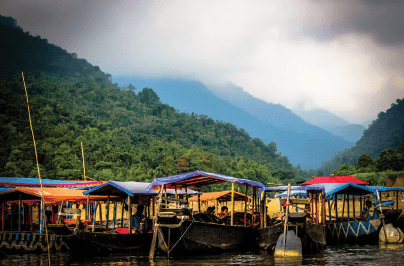
A first journey through Bangladesh can feel wonderfully different from travel elsewhere in South Asia. The country is densely populated, river-shaped, energetic, and remarkably varied. Historic cities, Buddhist ruins, tea estates, mangrove forest, beaches, and hill landscapes can all fit into one trip, but the experience is best when you resist the urge to rush.
Build a realistic route
Begin with a small number of regions and allow time for travel between them. Dhaka is the usual starting point and rewards at least a full day for Old Dhaka, the riverfront, museums, food, and architecture. Sonargaon can be added as a nearby heritage excursion. From there, travelers often choose one or two larger directions: Sreemangal for tea country, the southwest for Bagerhat and the Sundarbans, or the southeast for Chattogram, Cox's Bazar, and hill scenery.
Distances on a map can be misleading. Traffic, ferry crossings, weather, and road conditions may extend travel times, so avoid tight connections and keep a buffer day in a multi-week itinerary.
Understand your transport options
Trains can be a comfortable way to connect major cities when seats are available. Intercity buses reach more destinations, while domestic flights can reduce travel time on selected routes. Boats and launches are part of the country's transport culture, but vessel type and comfort vary. Use reputable booking channels, confirm departure details, and ask locally about current conditions.
Within cities, ride-hailing services, auto-rickshaws, cycle rickshaws, and hired cars are common. Agree on the fare or use the applicable metered or app-based option before starting.
Food, water, and daily comfort
Bangladeshi food is built around rice, fish, vegetables, lentils, meat curries, and regional snacks. Try busy establishments where food is freshly prepared, and communicate any dietary restrictions clearly. Drink sealed or properly treated water and carry basic supplies for long road journeys.
Weather-ready clothing matters. Pack breathable layers, a light rain shell, comfortable shoes, sun protection, and modest clothing suitable for religious sites and rural communities. Remove shoes when requested and ask before photographing people.
Language, money, and connectivity
Bangla is the national language, while English is used in many hotels and tourism settings. Learning a few greetings is appreciated. Keep a mix of payment options and some local currency, particularly outside major cities, without carrying more cash than necessary. Mobile coverage is widespread in populated areas but may weaken in forests, islands, hills, or on river journeys.
Travel respectfully
Bangladesh is known for hospitality, but visitors should remain attentive to local customs. Dress with context in mind, be considerate during prayer times, and avoid treating communities as attractions. When visiting Indigenous or rural communities, use a knowledgeable local guide and follow community preferences about access and photography.
Prepare, then stay flexible
Check current entry requirements with official authorities, keep digital and paper copies of important documents, and arrange appropriate travel insurance for your own circumstances. The most memorable first trip will combine preparation with patience: leave room for conversation, unexpected river views, changing weather, and the unplanned moments that reveal everyday Bangladesh.


