

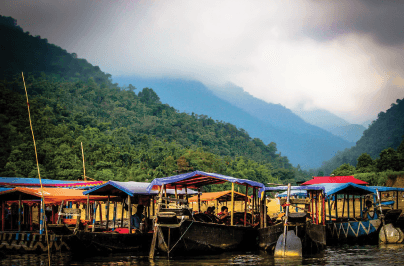
The Bangladesh Sundarbans is a tidal world of mangrove channels, mudflats, islands, birds, deer, fishing communities, and constantly changing light. It is not a conventional safari destination. Most journeys unfold from a boat, and the pleasure comes from moving slowly through a vast living landscape rather than chasing a guaranteed wildlife sighting.
Understand the style of the trip
Multi-day boat journeys are the usual way to reach quieter parts of the forest. Accommodation, cabin size, food, deck space, safety equipment, and environmental practices vary between vessels. Ask for clear details before booking, including the planned boarding point, route, group size, and what is included.
Shorter excursions may visit the forest edge, but they cannot provide the same sense of scale. If the Sundarbans is a central reason for your trip, allow enough time for a proper river journey and for travel to and from the gateway area.
Choose an appropriate season
Cooler and drier months are generally the most comfortable for extended time on deck and forest walks. The monsoon brings dramatic water and greenery but can also mean rough conditions, heavy rain, and disrupted schedules. Weather and river conditions should always take priority over a fixed itinerary.
Keep wildlife expectations realistic
The mangroves support Royal Bengal tigers, spotted deer, crocodiles, dolphins, monkeys, reptiles, and rich birdlife. Tigers are elusive, and no responsible operator should promise a sighting. Tracks, calls, distant movement, and the ecology of the forest are meaningful parts of the experience. Binoculars often add more value than a long list of expected species.
Permits and local guidance
Forest entry involves current permissions and operating rules. Confirm arrangements with a reputable operator and verify up-to-date requirements through the relevant authorities. Follow the instructions of licensed guides and forest personnel, especially during shore visits and when navigating narrow creeks.
What to pack
- Lightweight clothing in neutral colors and a warmer layer for cool mornings.
- Rain protection, sun protection, insect repellent, and comfortable closed shoes.
- Binoculars, a dry bag, spare batteries, and protection for camera equipment.
- Personal medication and basic supplies, since shops are unavailable inside the forest.
- A reusable bottle and minimal single-use plastic.
Travel responsibly in the mangroves
Keep noise low, never feed wildlife, and do not remove plants, shells, or other natural material. Dispose of waste through the vessel's proper system and ask how sewage and plastic are managed. Respect fishing boats and settlements, and do not photograph people at close range without permission.
Combine the forest with nearby heritage
Bagerhat's historic mosque city can add architectural and historical context to a southwest itinerary. Khulna and surrounding river towns also provide a transition between urban Bangladesh and the forest waterways. Leave schedule buffers around long road and boat transfers so that weather or tide changes do not force unsafe decisions.
A successful Sundarbans visit is measured in attention: the sound of birds at dawn, a dolphin surfacing beside the boat, changing salinity, and the intricate relationship between people and the mangrove environment.


